


Do restaurants need a website? Yes, most do. Facebook can help people notice you. A website helps people choose you. That difference matters when someone is hungry, comparing options, or ready to book now.
At Bite Blueprint, I keep seeing the same gap. Owners post often on Facebook, but they still miss search-driven traffic, direct calls, and clean booking paths. The real question is not whether social matters. It does. The real question is what each channel is built to do.
This is where the framework gets useful. Diners usually find a place in one of three ways: planned, searching, or scrolling. Once you see those paths clearly, the website decision gets much easier.
Do restaurants need a website?
Short answer: Facebook can support attention. A website converts intent.
Restaurant website vs Facebook page
If your restaurant depends only on Facebook, you are renting attention on a platform you do not control. Your page can still help. It can show personality, specials, and guest comments. But it is weak at closing high-intent traffic.
A person searching for hours, menu, location, or reservations is not browsing casually. That person wants proof fast. A clear local restaurant website delivers that proof in seconds. A complete Google Business Profile helps diners confirm the basics fast.
This is why the restaurant website vs facebook page debate usually goes sideways. Owners compare posting reach to website cost. Diners compare clarity to confusion. Those are not the same decision. For owners asking do restaurants need a website, the better test is where guests make decisions.
If you are asking restaurant website or facebook page, the practical answer is both. But they should not carry the same job. Facebook helps people remember you. Your website helps people act.
That is also the best answer to does a restaurant need a website. If you want more control over discovery, trust, and direct response, yes. You need one.
The 3 ways diners actually find restaurants
Key takeaway: Diners do not discover restaurants in one channel. They arrive through different intent paths.
I use a simple framework here. It is not academic. It is operational.
- Planned diners already know the area, the occasion, or the cuisine.
- Searching diners open Google, Maps, or Safari and compare options.
- Scrolling diners notice you while using Facebook or Instagram.
Planned diners want menu details, parking, hours, and a clear feel for the place. Searching diners want a restaurant online presence they can trust fast. Scrolling diners want a reason to click, save, or remember you.
A local restaurant website matters most for the first two groups. Those people are closer to action. They are not asking for entertainment. They are asking for confidence.
That is why I do not treat social as the center of the system. I treat it as the spark. The website is where that spark becomes a reservation, or dies. If you want the visibility side of that system, start with The Local SEO Blueprint: A 5-Step Guide for Service Businesses to Win Online.

Where Facebook helps, and where it falls short
Key takeaway: Facebook is strong for reminders and community. It is weak for clean intent capture.
Facebook helps when you want to show energy. It works for event reminders, new specials, behind-the-scenes posts, and proof that the place is alive. That matters. A dead feed can make a restaurant feel stale.
But the platform has limits. Important information gets buried. Menus become screenshots. Reservation steps get messy. Hours can drift out of sync. That hurts trust at the exact moment someone wants a fast answer.
This is the part most website vs social media for restaurants conversations miss. Social is good at momentum. It is not built for clarity. That same problem sits behind Beyond the Phonebook: A 7-Stage Small Business Branding Guide. Restaurant operators can track broader guest shifts through the National Restaurant Association research reports.
| Channel | What it does well | Where it breaks |
|---|---|---|
| Facebook page | Posts, updates, comments, community energy | Weak menu structure, weak search intent capture, weak conversion flow |
| Restaurant website | Hours, menu, map, bookings, direct calls, brand trust | Needs setup, maintenance, and a clear structure |
When someone asks, “Do restaurants really need a website to attract customers?” my answer is simple. If you want to rely only on scrolling traffic, maybe not. If you want to win searching traffic, yes.
An active Facebook page supports the business. A clear website supports the decision.
What a restaurant website must include to drive orders and reservations
Key takeaway: The best restaurant website features are not flashy. They remove friction.
The goal is not a fancy site. The goal is a simple, useful one. Once owners ask do restaurants need a website, the useful answer is to list what the site must do.
Here are the core restaurant website features that matter most:
- Clear hours that match your live operations
- A readable menu page, not a buried image
- Phone number and tap-to-call button
- Address, map, and parking cues
- Direct path to online orders and reservations
- Photos that show the room has life
- A short explanation of what makes you worth choosing
- FAQ content for common questions
These are the real restaurant website benefits. They reduce doubt. They reduce lost calls. They reduce “maybe later.”
If budget is the fear, start smaller. A basic site with five solid pages beats a busy Facebook feed that sends people in circles. That is especially true when owners worry about small restaurant website cost. The first version does not need to be perfect. It needs to be useful. If you are comparing options, the U.S. Small Business Administration competitive analysis guide is a good place to pressure-test the decision.
And yes, there are affordable website builders for restaurants. But even with builders, the structure still matters more than the software. Bad structure on a cheap platform still loses business.
If the site cannot help someone move from curiosity to action, it is just decoration.
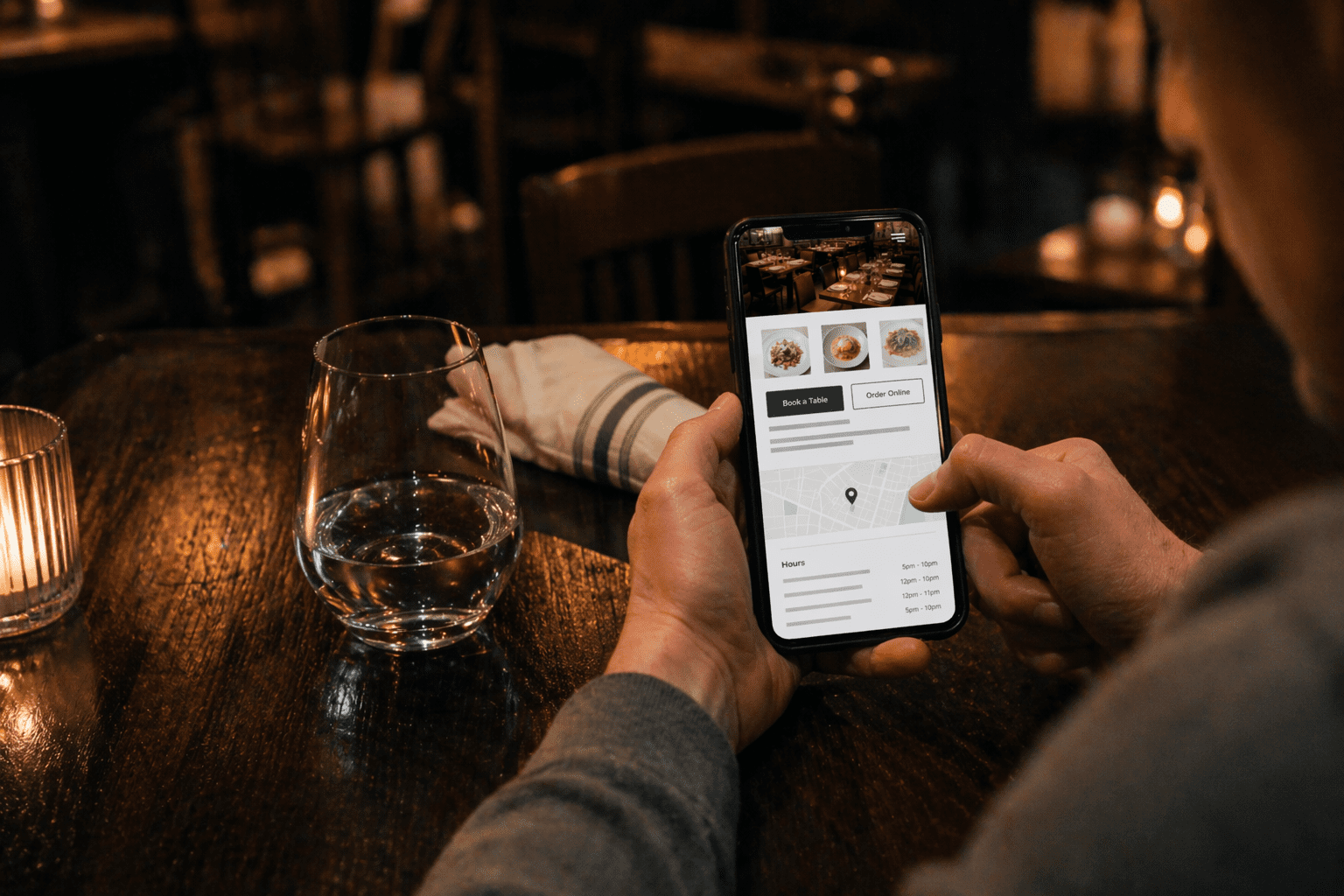
A simple decision framework: when to stay social-first and when to invest in a website
Key takeaway: If guests already know you, social can support growth. If guests need to evaluate you, a website becomes essential.
Use this simple framework. If you still ask do restaurants need a website, start by checking how many first-time guests come from search.
Stay social-first for now if:
- Most business comes from repeat guests
- You do not depend on search traffic yet
- Your menu and bookings are handled elsewhere cleanly
- You are still proving demand
Build a lean website now if:
- New guests search before they visit
- You lose calls because details are hard to find
- Guests ask the same questions again and again
- You want a clearer path for direct orders and reservations
Invest in a stronger site if:
- You run events, catering, or multiple revenue paths
- Your restaurant online presence feels fragmented
- You want better data on what drives calls, clicks, and bookings
- You are serious about long-term brand trust
This is the deeper point behind restaurant website benefits. A website is not only a brochure. It is a working part of the business. When that system is built well, it supports better follow-up, cleaner conversion paths, and stronger demand capture. I break that down in From Invisible to Inevitable: A Guide to Lead Generation Strategies.
If all you need today is proof of life, Facebook may carry more weight. If you need trust, clarity, and a more welcoming path to action, the website becomes the better tool.
For owners who want a fair answer, here it is. Social gets attention. Search gets intent. Your website is what turns intent into action.
Conclusion
So, do restaurants need a website? If the goal is real growth, yes. Not because websites are trendy. Diners still need a fast place to check menu, hours, map, trust, and next steps.
Facebook should still be part of the mix. It helps people notice you. It helps you stay visible. But when someone is choosing where to go tonight, the website does the heavier lifting.
Build the page that answers the question before the diner asks it twice. That is how you stop losing business to noise. If you want the broader strategy view, start with our brand foundation guide.
